
by Patrick Burns.
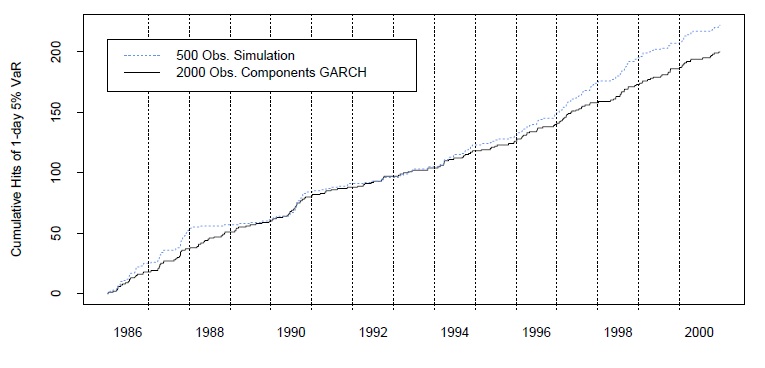
Abstract: The estimation of value at risk using univariate GARCH models is examined. A long history of the S&P 500 is used to compare these estimators with several other common approaches to value at risk estimation. The test results indicate that GARCH estimates are superior to the other methods in terms of the accuracy and consistency of the probability level. Although all of the GARCH models tested performed relatively well, the quality of the value at risk estimate does depend on which particular GARCH model is used. Weighting recent observations more heavily when fitting the GARCH model seems to be beneficial.
jun 25, 26
Programmers think programming is really hard. Non-programmers think it’s even harder than that. Figure 1: The perceived difficulty of programming. Why is programming so arduous? […]
jun 25, 26
Coordinates: 2014 September 15-17 in the London borough of #rstats. 15th, evening I had just the right number of R bugs so that I could walk to the drinks and arrive [...]
jun 25, 26
Navigation gets you from where you are to where you want to be. Speaking of navigation, you can jump to selected sections of this post: Navigation; R-bloggers; Task views; Rdocumentation.org; [...]