

by Patrick Burns.
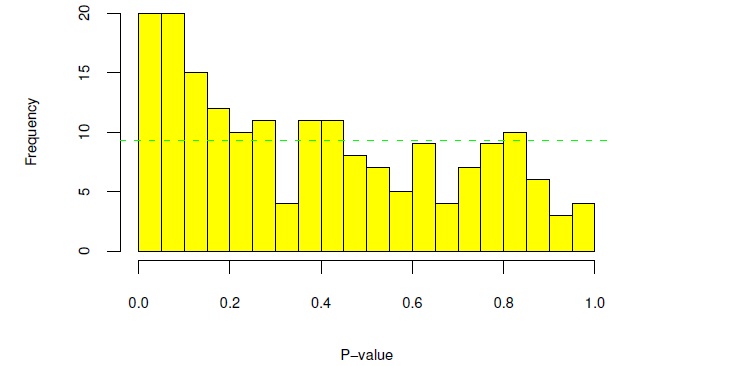
Abstract: Random portfolios can provide a statistical test that a trading strategy performs better than chance. Each run of the strategy is compared to a number of matching random runs that are known to have zero skill. Importantly, this type of backtest shows periods of time when the strategy works and when it doesn’t. Live portfolios can be monitored in this way as well. This allows informed decisions — such as changes in leverage — to be made in real-time.
jun 25, 26
Several packages on CRAN provide (or relate to) interfaces between databases and R. Here is a summary, mostly in the words of the package descriptions. Remember that package names are [...]
jun 25, 26
Chapter 32 of Tao Te Programming advises you to make bricks instead of monoliths. Here is an example. The example is written with the syntax of R and is a [...]
jun 25, 26
There is a mechanism that allows variability in the arguments given to R functions. Technically it is ellipsis, but more commonly called ”…”, dots, dot-dot-dot or three-dots. Basics The three-dots [...]