

by Patrick Burns.
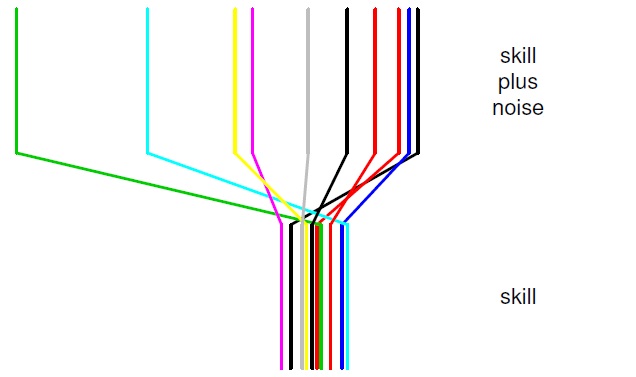
Abstract: Most likely you know of the stock market dartboard game: some reputed experts are pitted against a portfolio that was selected ”by throwing darts”. This makes compelling journalism — especially when the darts win — but is less than perfect science. However, a more rigorous version of this game is good science. The enhanced method generally goes by the name of ”random portfolios” or ”Monte Carlo simulation”. It has the power to radically transform the practice of fund management — a dart to the heart. We will start by taking a close look at performance measurement. We will then move on to some wider issues of fund management.
This version: 2007 March 08 (pdf)
A slightly edited version of this appeared in the March 2007 issue of Professional Investor under the title ”Bullseye”.
jun 25, 26
Programmers think programming is really hard. Non-programmers think it’s even harder than that. Figure 1: The perceived difficulty of programming. Why is programming so arduous? […]
jun 25, 26
Coordinates: 2014 September 15-17 in the London borough of #rstats. 15th, evening I had just the right number of R bugs so that I could walk to the drinks and arrive [...]
jun 25, 26
Navigation gets you from where you are to where you want to be. Speaking of navigation, you can jump to selected sections of this post: Navigation; R-bloggers; Task views; Rdocumentation.org; [...]